Author of adventure/thriller and horror fiction

  • Home
  • The Blog
  • Email List/Contact
  • Interviews
  • Apocalyptic
  • Horror
  • Military Thriller
  • Sci-fi/Fantasy
  • All books

Are Southeastern American Natives Descended from the Maya?

October 20, 2016 by Craig DiLouie Leave a Comment

mayaAround 800 AD, the Maya civilization in Central America collapsed, mostly likely due to climate change caused by volcanic eruptions. Nobody knew where they went, so it was theorized they died out.

When Maya ruins were first discovered by Europeans in the 1800s, many immediately saw cultural similarities between them and North American natives. But no evidence of a migration.

Ruins discovered in Georgia suggest a possible connection between the Maya and the natives of the Southeastern United States. The ruins align with Maya building practices and suggest the Maya middle and lower classes migrated north to escape the drought. They build towns and eventually became absorbed into local societies.

It’s an intriguing and controversial theory. Learn more here at MysteriousEarth.net.

Filed Under: Other History, The Blog

Police Investigate Vampire Slaying in Romania

October 19, 2016 by Craig DiLouie Leave a Comment

In Romania, police are investigating a vampire slaying in a village. The family of a dead man, whom they believed had become a vampire, dug him up, tore out his heart, burned it to ashes, mixed it with water, and drank it.

According to legend, vampires like to prey on their families. The family contends they are following tradition and beliefs to protect themselves. The police contend vampires aren’t real and digging up and destroying deceased relations is illegal.

The case offers interesting insight into vampire lore in Romania. Men in the village stated:

* They learned vampire slaying when they were very young
* Many had a vampire and vampire victims in their family histories
* Causes of vampirism include dying before baptism and black cats jumping over your coffin
* Vampires can be seen in mirrors and are not warded off by crosses or garlic
* If a family member gets sick shortly after another family member dies, their blood is being drained each night
* Two ways to kill a vampire–cut out the heart and burn it (it will squeak and try to escape, so pin it with a wooden stake), the other is to pierce the bellybutton before it rises to feed

Learn more here.

vampire

Filed Under: Other History, The Blog

CRASH DIVE and SILENT RUNNING Now Available in Audiobook and Paperback

October 17, 2016 by Craig DiLouie Leave a Comment

crash-dive-series

The popular CRASH DIVE series, previously available for Kindle, is now available in trade paperback and audiobook!

The audiobook is narrated by none other than the great RC Bray.

Learn more about CRASH DIVE and your options here.

Learn more about SILENT RUNNING and your options here.

The third book in the series, BATTLE STATIONS, is now available for pre-order here. The Kindle book will be released October 28, 2016. The paperback and audio versions will follow shortly afterwards.

Thank you for reading!

Filed Under: Crash Dive Series, Submarines & WW2, The Blog

The Death of Battleship Yamato

October 13, 2016 by Craig DiLouie Leave a Comment

Yamato was one of two super battleships built by the Japanese in the years leading up to Japan’s war against the United States. She displaced nearly 73,000 tons in the water and fired nine 40-cm guns, the biggest guns ever put on a warship. She played little part in the war until the Battle of Leyte Gulf. The Japanese admiral, on the verge of a stunning victory against the outmaneuvered Admiral Halsey, turned back. If he hadn’t, his fleet could have destroyed the American invasion fleet supporting the troops invading the Philippines.

By early 1945, Japan was running out of fuel to operate its fleets. Yamato was ordered on a one-way mission to Okinawa, where she was supposed to beach herself and fight to the end. She and the other ships in her task force were detected and sunk by American planes.

Here’s the death of Yamato as portrayed in a Japanese film, Otoko-Tachi no Yamato.

Filed Under: Submarines & WW2, The Blog

The Man Who Saved the World Part 2

October 6, 2016 by Craig DiLouie Leave a Comment

Some time back, I posted about the “man who saved the world.” During the Cuban Missile Crisis, at the end of a weather report, missile crews in Okinawa received orders to launch against the USSR and other targets. Captain Basset, commanding one crew, thought it strange the DEFCON readiness rating was not 1, indicating war. Another crew thought it strange and sought verification. A third crew said they intended to launch, which prompted the captain to order the nearby second crew to send airmen with weapons to shoot the lieutenant if he proceeded. The captain then sought verification from his commanding officer, a major who ordered the crews to stand down. The major was later demoted and removed from his duties.

Read the full story here.

ESQUIRE now has a similar story of another man who saved the world, this time on the Russian side. In 1983, when tensions between the US and USSR were at a new all-time high, Stanislav Petrov, a lieutenant-colonel manning the early warning system, detected a limited US missile launch. It looked suspicious to him, and the system was glitchy. However, it was his duty to report the “launch” to the Kremlin, who almost certainly would have ordered a counter strike. He stood down.

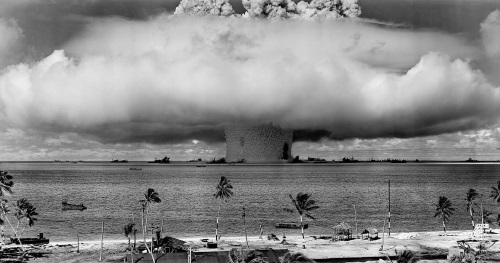
Men like these are the unsung heroes of the Cold War. As in we should be naming our kids Basset and Stanislav and holding annual holidays in their honor. Without them, we might all be dead. As in the entire planet.

boom

Filed Under: Other History, The Blog

SPARTACUS by Howard Fast

September 29, 2016 by Craig DiLouie 2 Comments

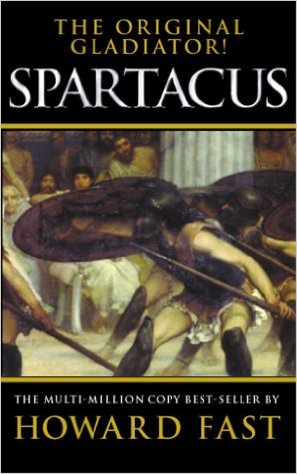
spartacusHoward Fast’s SPARTACUS, which he self-published in 1951, is one of my favorite novels. It was later adapted into a terrific film directed by Stanley Kubrick and starring Kirk Douglas, Tony Curtis, Jean Simmons, Laurence Olivier, Charles Laughton and Peter Ustinov. Both are worth enjoying as the same but distinctly separate stories of Spartacus’ life.

Fast wrote SPARTACUS in response to the three months in prison he spent during the McCarthy Era, and self-published it because no publisher would touch it. Now it’s a classic.

SPARTACUS tells the story of the slave uprising against Rome during the Third Servile War (73-71 BC), led by Spartacus, a Thracian gladiator. Fast’s novelization of his life differs in some key respects from the life of the historical Spartacus so as to tell the story he wanted, which is an interpretation of Spartacus. The novel expresses the theme that life, love and freedom are paramount human values, and that oppression and slavery debase humanity.

The theme is evidenced in the story structure, which is split between two narratives. In one, a group of Roman nobles travel Italy touring the “tokens of punishment” (crucified slaves), the other flashbacks and stories describing Spartacus and his fight to end slavery. The Romans have the best of everything, a rich life built on the labor and suffering of millions of slaves. They don’t particularly enjoy it, though. Wealth and idleness have corrupted the virtues that build their republic, enabled by slavery. They hate and fear the slaves they exploit, going so far as to call them “instrumentum vocale,” or tools with a voice.

In the other narrative, we see Spartacus struggling to survive as a slave working in a marble mine and then as a gladiator in the arena. It disgusts him that people could be used up and thrown away to thrill jaded Romans. Gladiatorial combat isn’t gloried as it in films like GLADIATOR or the TV series SPARTACUS. Men don’t slaughter each other just to hear crowds cheer. The novel is closer to real life, which is the gladiators were fed and adored and pampered but only for their ability to kill other men until they themselves were finally killed. They hated it.

Spartacus leads the gladiators in a revolt and begins building a slave army that intends to overthrow Rome and begin a new golden age reminiscent of idealized simpler times. He smashes army after army sent against him until finally the Romans destroy him. But have they destroyed what Spartacus represents, the human spirit?

SPARTACUS is beautifully written and stirring. If you haven’t read it, I highly recommend picking it up.

Filed Under: Books, Other History, The Blog

  • « Previous Page
  • 1
  • …
  • 14
  • 15
  • 16
  • 17
  • 18
  • …
  • 21
  • Next Page »

Categories

  • APOCALYPTIC/HORROR
    • Apocalyptic
    • Art
    • Film Shorts/TV
    • Movies
    • Music Videos
    • Reviews of Other Books
    • Weird/Funny
    • Zombies
  • COMICS
    • Comic Books
  • CRAIG'S WORK
    • Armor Series
    • Aviator Series
    • Castles in the Sky
    • Crash Dive Series
    • Djinn
    • Episode Thirteen
    • Hell's Eden
    • How to Make a Horror Movie and Survive
    • My Ex, The Antichrist
    • One of Us
    • Our War
    • Q.R.F.
    • Strike
    • Suffer the Children
    • The Alchemists
    • The Children of Red Peak
    • The End of the Road
    • The Final Cut
    • The Front
    • The Infection
    • The Killing Floor
    • The Retreat Series
    • The Summer Fun Massacre
    • The Thin White Line
    • Tooth and Nail
  • GAMES
    • Video & Board Games
  • HISTORY
    • Other History
    • Submarines & WW2
  • MEDIA YOU MIGHT LIKE
    • Books
    • Film Shorts
    • Interesting Art
    • Movies & TV
    • Music
  • POLITICAL
    • Politics
  • SCIENCE
    • Cool Science
  • The Blog
  • WRITING LIFE
    • Craig at Work
    • Interviews with Craig
    • Reader Mail
    • Writing/Publishing

Copyright © 2026 · Author Pro Theme on Genesis Framework · WordPress · Log in