Author of adventure/thriller and horror fiction

  • Home
  • The Blog
  • Email List/Contact
  • Interviews
  • Apocalyptic
  • Horror
  • Military Thriller
  • Sci-fi/Fantasy
  • All books

Battle of Isandlwana

June 23, 2016 by Craig DiLouie Leave a Comment

IsandlwanaIt’s History Thursday, Battle of Isandlwana.

British hopes to unite South African under a single confederation under British rule received a major setback when the invading army’s main camp, defended, by 1,800 troops, was overrun in an overwhelming attack by Zulu warriors.

The British had given the Zulu King Cetshwayo an ultimatum he couldn’t comply with so as to instigate the war. Lord Chelmsford led 15,000 troops into Zululand in five columns. The idea was to find the main Zulu army, encircle and destroy it before moving on to capture Ulundi, the Zulu capital. He was afraid the Zulus would avoid a fight, but these fears were unfounded.

The Zulus were a warrior society in which most able men constituted the army during times of war. They were armed mainly with short assegai spears, which they used for thrusting, and cowhide shields. While logistically they couldn’t stay in the field very long, they could travel large distances very quickly.

The king told the 24,000 warriors in his main army, “March slowly, attack at dawn and eat up the red soldiers.”

About 4,000 warriors were detached for a diversionary attack on another column. Chelmsford took the bait with the bulk of his forces, leaving Lieutenant Colonel Henry Pulleine in charge of the main camp. The Zulu main army discovered the camp and attacked immediately, deploying into a battle line as they ran.

Despite an advantage in cannon and musketry, the British were poorly led and deployed, and they had not entrenched. In the ensuing battle, more than 1,300 British troops were killed, while the Zulus suffered losses of about 1,000 warriors.

Isandlwana proved a major defeat for the British. King Cetshwayo attempted a negotiated peace but was rebuffed by Chelmsford, who hoped to restore his shattered reputation. The British invaded a second time and crushed the Zulus at the Battle of Ulundi before burning the Zulu capital, ending the war.

The terrific film ZULU DAWN depicts the destruction of the British army, check it out:
Filed Under: Other History, The Blog

Animation Created From Early 1900s Photos

June 15, 2016 by Craig DiLouie Leave a Comment

Russian animator Alexey Zakharov created a very cool little animated film from old photos of American cities in the early 1900s.

Filed Under: Film Shorts, Other History, The Blog

History Thursday! Bastogne Commander Told the Germans, “Nuts!” Why?

June 9, 2016 by Craig DiLouie Leave a Comment

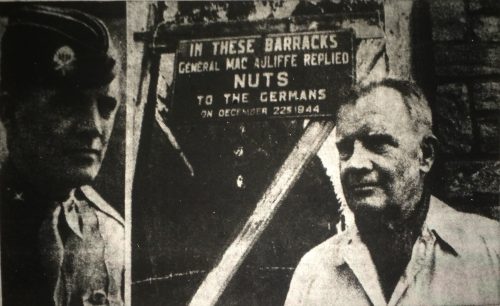
nutsThe U.S. Army published a short article about the events surrounding why the American commander at Bastogne, confronted with a demand by the Germans to surrender, famously replied, “Nuts!”
Christmas 1944, Bastogne, Belgium, Battle of the Bulge.

The German high command had unleashed thousands of tanks and troops at what they saw as a vulnerable point in the Allied lines, deep in the Ardennes in northeastern France.

During the attack, the 101st Airborne was sent to the line to reinforce it. They held Bastogne, Belgium, site of a critical road intersection. The Germans surrounded the town during one of the coldest winters on record and pounded the airborne troops.

Three days before Christmas, four Germans soldiers approached the American positions with a request to see the commanding officer. They carried a message from the German commander–a request to surrender.

Brigadier General Anthony McAuliffe famously sent back a formal reply: “Nuts!”

When McAuliffe had been told of the request to surrender by a subordinate, he said, “They want to surrender?” When corrected, he added, “Us, surrender? Aw, nuts!” to the amusement of his men.

The answer was no, but the Germans needed a formal reply. McAuliffe, who had more pressing things to deal with, didn’t know what to say. One of his subordinates told him his initial reply was hard to top. So that’s what he sent back:

December 22, 1944

To the German Commander,
N U T S !
The American Commander

When the German officers saw the message, they were confused – with how many states in Germany had different dialects at the time. An American translated, “The reply is decidedly not affirmative.”

Click here to read the whole story.

Filed Under: Submarines & WW2, The Blog

The Destruction Of Pompeii

April 20, 2016 by Craig DiLouie Leave a Comment

Pompeii was an ancient Roman city near modern-day Naples that was destroyed by the eruption of Mount Vesuvius over a period of 48 hours in 79 AD.

From June 26 to October 25, 2009, the Melbourne Museum hosted an exhibit, “A Day in Pompeii,” a 3D theater installation that allowed visitors to experience the horror of this event. Watched by more than 330,000 people, it was the most popular traveling exhibit staged by an Australian museum.

Check it out here:

Filed Under: Other History, The Blog

SILENT RUNNING Now Available!

February 15, 2016 by Craig DiLouie Leave a Comment

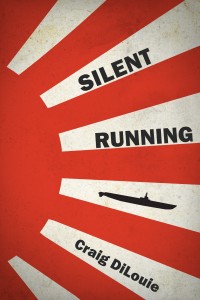
SILENT RUNNING by Craig DiLouie (cover)SILENT RUNNING, the second episode in my CRASH DIVE WW2 submarine adventure series, releases today!
Lt. Charlie Harrison survived the horrors of Rabaul and the midnight battle with the Mizukaze. When he reports to Sabertooth at Pearl, he must contend with a crew that is less than welcoming.

While underway, the captain reveals the submarine’s mission–to go to the Japanese-occupied Philippines, deliver supplies to the Filipino guerillas, and bring American refugees home.

When Sabertooth crosses paths with Yosai, one of the big IJN aircraft carriers that attacked Pearl Harbor, the mission changes. As disaster strikes, Charlie must take command and make the ultimate decision–get the refugees home, or risk everything on an all-or-nothing attack.

Get it here!
.
.

Filed Under: Crash Dive Series, Submarines & WW2

Vampire Burials Unearthed

January 25, 2016 by Craig DiLouie Leave a Comment

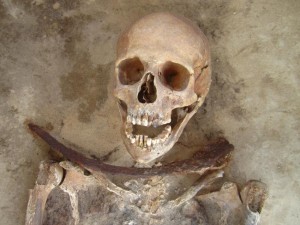
vampireARCHAEOLOGY, a publication of the Archaeological Institute of America, recently published a short article about “vampire burials” uncovered in a cemetery in Poland.

Six bodies were found buried with stones under their chins or sickles across their bodies. According to local legend, that was how you kept the corpses from returning to consume the living. Legend also also promoted the belief that the first person to die during an outbreak of infectious disease (in this case, likely cholera) were likely to become vampires, so these six, among 285 skeletons found at the cemetery, were likely the first to die.

Read the story here.
.
.

Filed Under: Other History

  • « Previous Page
  • 1
  • …
  • 17
  • 18
  • 19
  • 20
  • 21
  • Next Page »

Categories

  • APOCALYPTIC/HORROR
    • Apocalyptic
    • Art
    • Film Shorts/TV
    • Movies
    • Music Videos
    • Reviews of Other Books
    • Weird/Funny
    • Zombies
  • COMICS
    • Comic Books
  • CRAIG'S WORK
    • Armor Series
    • Aviator Series
    • Castles in the Sky
    • Crash Dive Series
    • Djinn
    • Episode Thirteen
    • Hell's Eden
    • How to Make a Horror Movie and Survive
    • My Ex, The Antichrist
    • One of Us
    • Our War
    • Q.R.F.
    • Strike
    • Suffer the Children
    • The Alchemists
    • The Children of Red Peak
    • The End of the Road
    • The Final Cut
    • The Front
    • The Infection
    • The Killing Floor
    • The Retreat Series
    • The Summer Fun Massacre
    • The Thin White Line
    • Tooth and Nail
  • GAMES
    • Video & Board Games
  • HISTORY
    • Other History
    • Submarines & WW2
  • MEDIA YOU MIGHT LIKE
    • Books
    • Film Shorts
    • Interesting Art
    • Movies & TV
    • Music
  • POLITICAL
    • Politics
  • SCIENCE
    • Cool Science
  • The Blog
  • WRITING LIFE
    • Craig at Work
    • Interviews with Craig
    • Reader Mail
    • Writing/Publishing

Copyright © 2026 · Author Pro Theme on Genesis Framework · WordPress · Log in